AnVIL Community Conference 2026 Conference Report
August 31–September 1, 2026
Broad Institute of MIT and Harvard, Cambridge, Massachusetts
The 2026 AnVIL Community Conference (ACC2026) brought together researchers, developers, educators, data scientists, and community members to share new work, explore emerging directions in genomic data science, and discuss how AnVIL can continue to support an evolving research community. Held at the Broad Institute of MIT and Harvard in Cambridge, Massachusetts, the meeting combined hands-on workshops and community discussion on August 31 with a full day of scientific talks, posters, and networking on September 1.
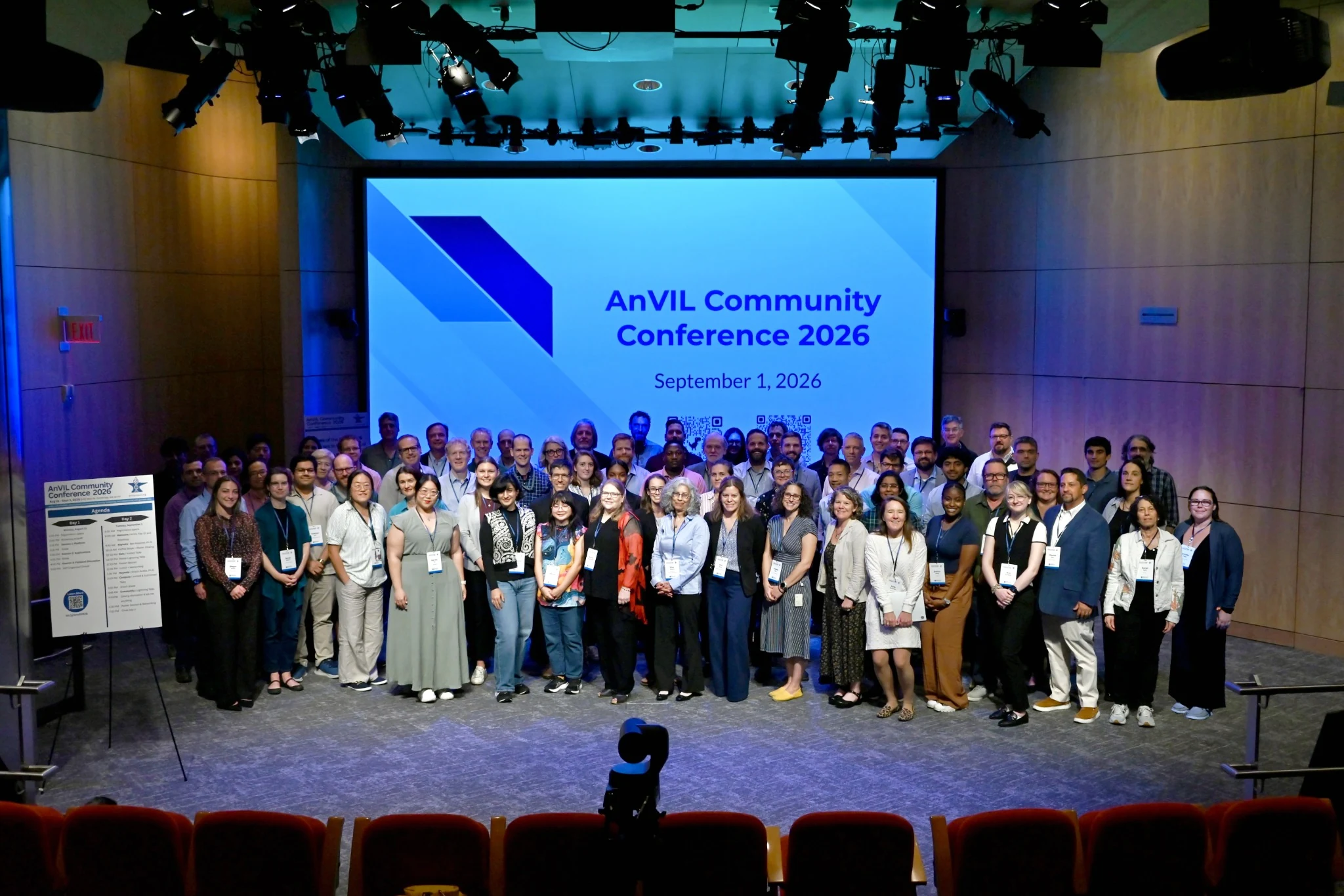
ACC2026 received 117 registrations for in-person participation and 168 registrations for virtual participation. The meeting was primarily an in-person gathering, with concurrent virtual attendance remaining around 25 participants.
Workshops and Community Discussion
ACC2026 opened with an afternoon of concurrent workshops and discussion designed to support both new and experienced AnVIL users. Sessions included AnVIL101, an AnVIL program retrospective, the All of Us and AnVIL Imputation Service workshop, a discussion of AI-enabled analyses on AnVIL, a DREAM Challenge session, and a closing Fishbowl discussion.
AnVIL101 and Platform Retrospective
The first workshop block paired an introduction to the AnVIL platform with a retrospective discussion about the program. AnVIL101, led by Ava Hoffman, provided an entry point for participants who were newer to the platform. In parallel, Jonathan Lawson led a retrospective focused on what has worked well across the AnVIL program, where challenges remain, and what could be improved.
Applications on AnVIL
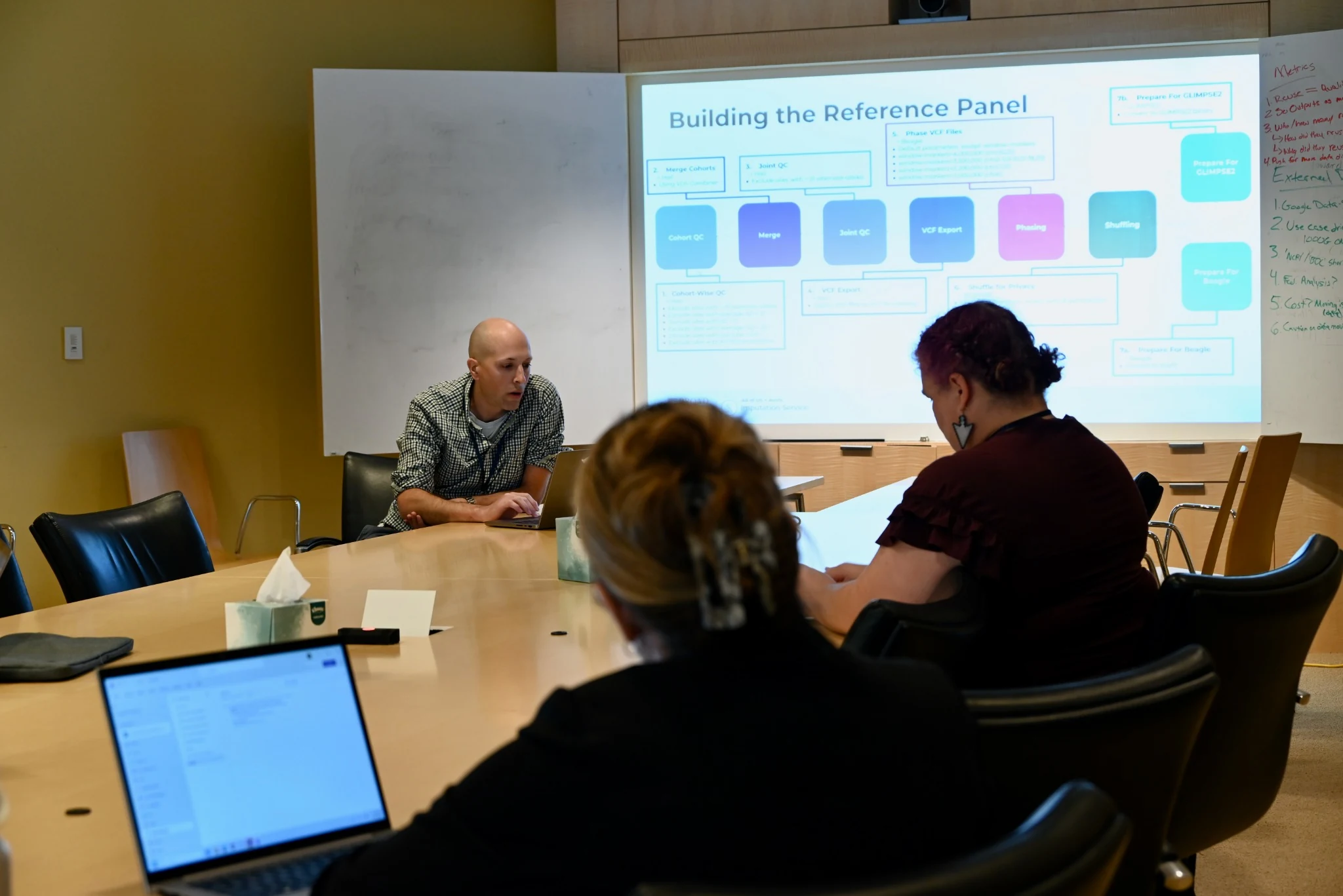
The second workshop block focused on scientific and technical applications. Chris Kachulis led a session on the All of Us and AnVIL Imputation Service, Vincent Carey led a discussion exploring AI-enabled analyses with AnVIL, and Kyle Ellrott led a DREAM Challenge session.
The AI-enabled analyses discussion explored both current opportunities and important limitations for using generative AI tools in cloud-based genomic analysis. Participants discussed ways AI could help researchers navigate complex datasets, troubleshoot software, generate documentation, work across analysis environments, and lower technical barriers for users who may not be experts in AnVIL or data science.
The discussion also emphasized the need to approach AI use thoughtfully when controlled-access data and credentials are involved. Participants considered ways to experiment with AI without exposing protected data, including working in environments that are not tied to controlled-access credentials, while also discussing what responsible, more integrated AI support might look like in the future.
Fishbowl Discussion: Data, Tools, and Mission
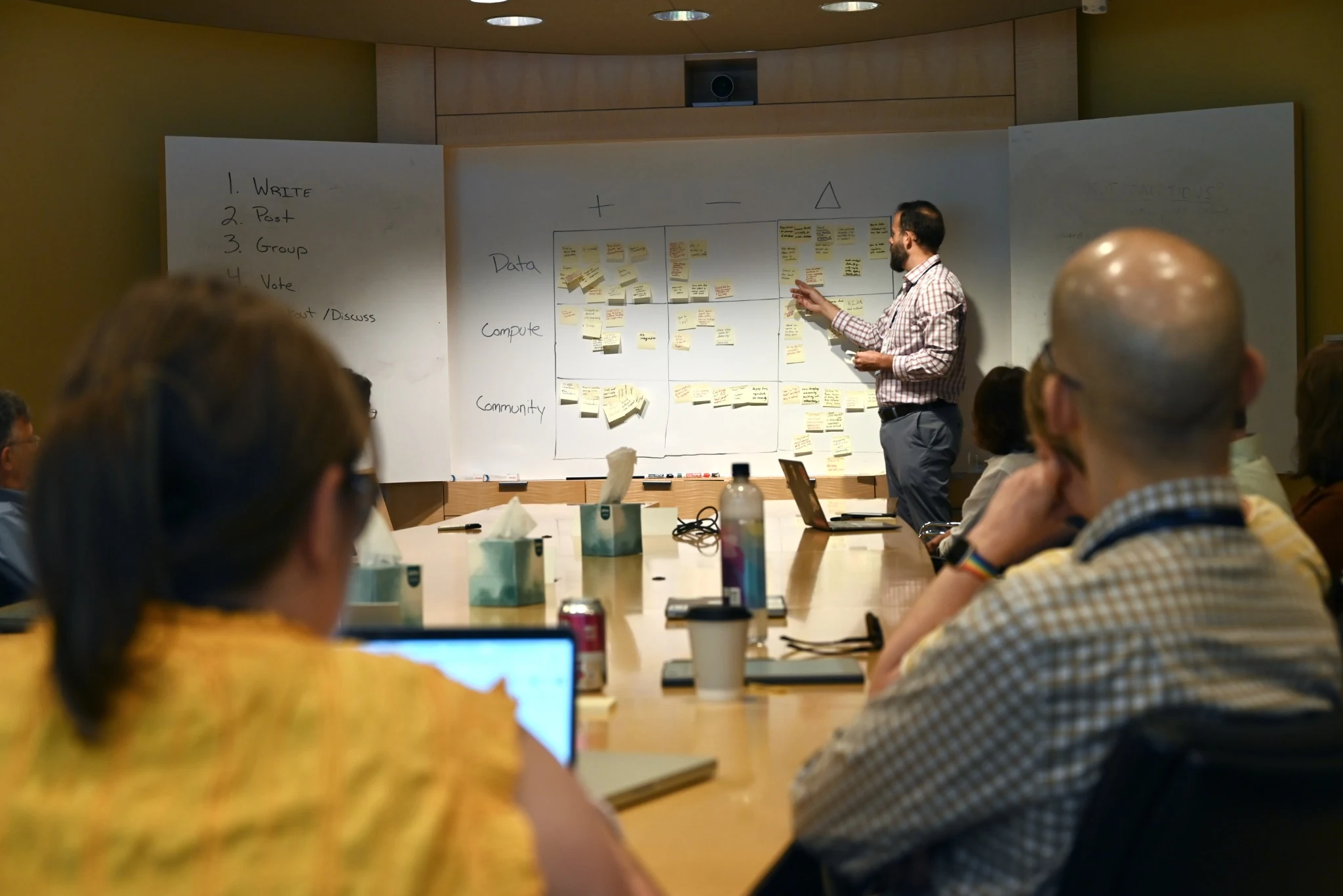
Day 1 concluded with a Fishbowl discussion led by Frederick Tan and Jeremy Goecks. The format invited participants to move between observing and actively joining the conversation, with discussion organized around three broad questions: what makes data valuable, what new tools or AI capabilities would be useful on AnVIL, and what larger scientific challenges the AnVIL community could tackle collectively.
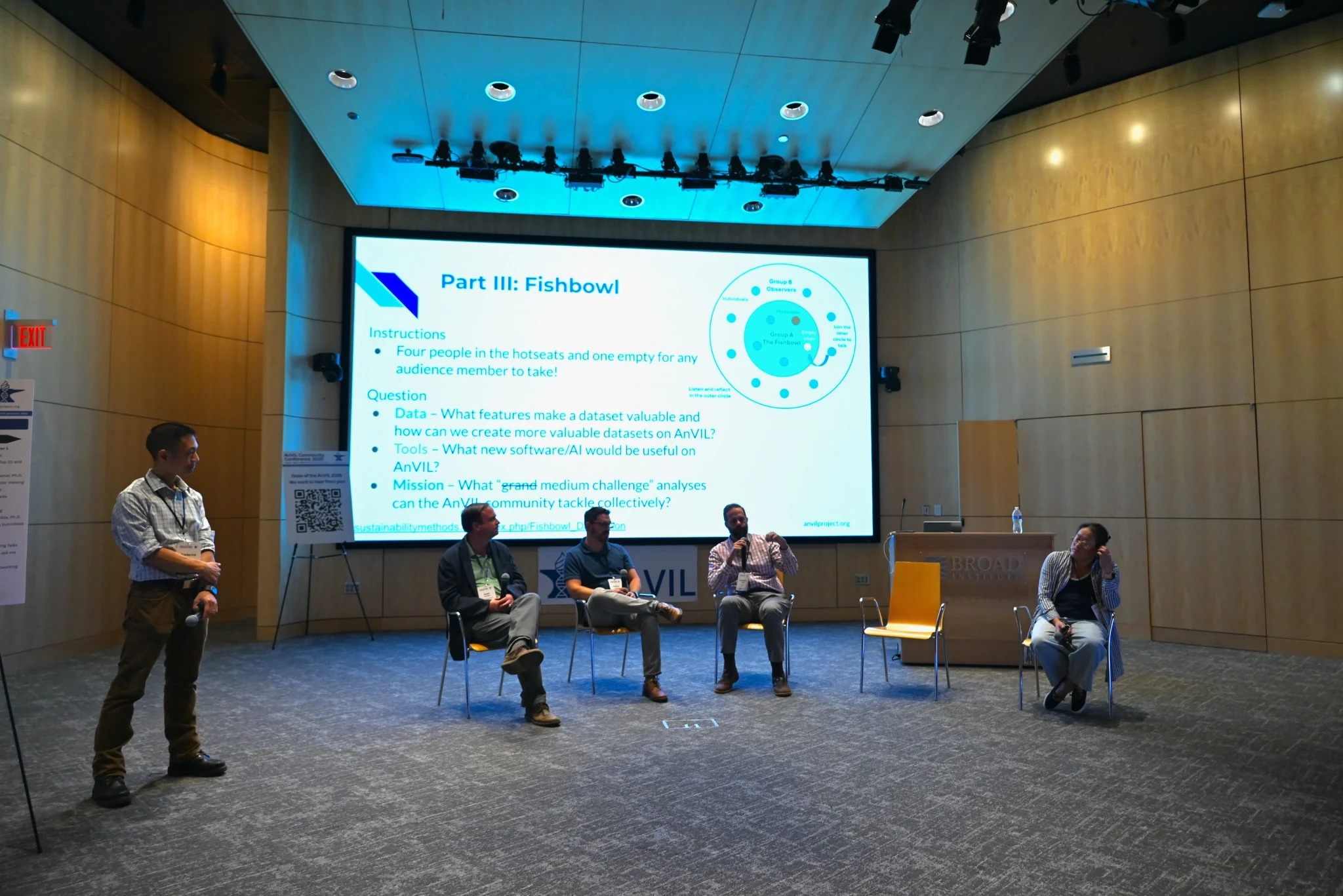
Several recurring themes emerged from the discussion:
- Making data easier to discover and use. Participants emphasized the importance of robust metadata, clearer descriptions of how datasets can be used, and research use cases that help users understand the scientific value of available data.
- Supporting cross-dataset analysis. The group discussed how AnVIL could make it easier to combine datasets and metadata across resources and institutions, while recognizing that different researchers want different levels of upstream harmonization.
- Using AI to lower technical barriers. Potential applications included assisting with configuration, authentication, software troubleshooting, documentation, dataset interrogation, and common platform pain points.
- Creating incentives for data sharing. Participants noted that data sharing is not rewarded as consistently as publication and discussed the need for stronger incentives, recognition, and citation practices.
- Building community-wide scientific challenges. The group explored whether challenge-based approaches, cloud credits, and other incentives could motivate collaborative analyses and encourage broader participation across the AnVIL community.
A central takeaway from the afternoon was that AI can already support useful work around documentation, software, and open or non-protected information, while broader integration with controlled-access research environments would require careful technical and policy consideration.
Welcome and AnVIL Top 10
Jonathan Lawson, Mike Schatz, and Robert Carroll opened the main conference program on September 1 with a welcome to ACC2026 and the AnVIL Top 10, highlighting developments across the project and setting the stage for the day's scientific and community-focused sessions.
Keynotes
Five Years on AnVIL: An Early Adopter's Experience with Consortium Data Sharing
Ben Heavner
Ben Heavner opened the keynote program with a presentation reflecting on five years of experience using AnVIL for consortium data sharing.
The GTEx Project(s) and AnVIL - Protecting and Sharing Data
Kristin Ardlie
Kristin Ardlie delivered the afternoon keynote on the Genotype-Tissue Expression (GTEx) project and AnVIL, with a focus on protecting and sharing genomic data.
Data
The morning Data session highlighted genomic resources and analysis platforms available through or connected with AnVIL, spanning rare disease diagnosis, multi-omics data, and the latest Human Pangenome Reference Consortium release.
Tools for Rare Disease Diagnosis: seqr Genomic Analysis Platform, Automated Reanalysis and Federated Variant Level Matching
Heidi Rehm
From Cohort to Cloud: Building the Multi-omics for Health and Disease Resource on AnVIL
Jill Moore
The Human Pangenome Reference Consortium Release 2: Available in AnVIL!
Benedict Paten
Poster Lightning Talks and Poster Session
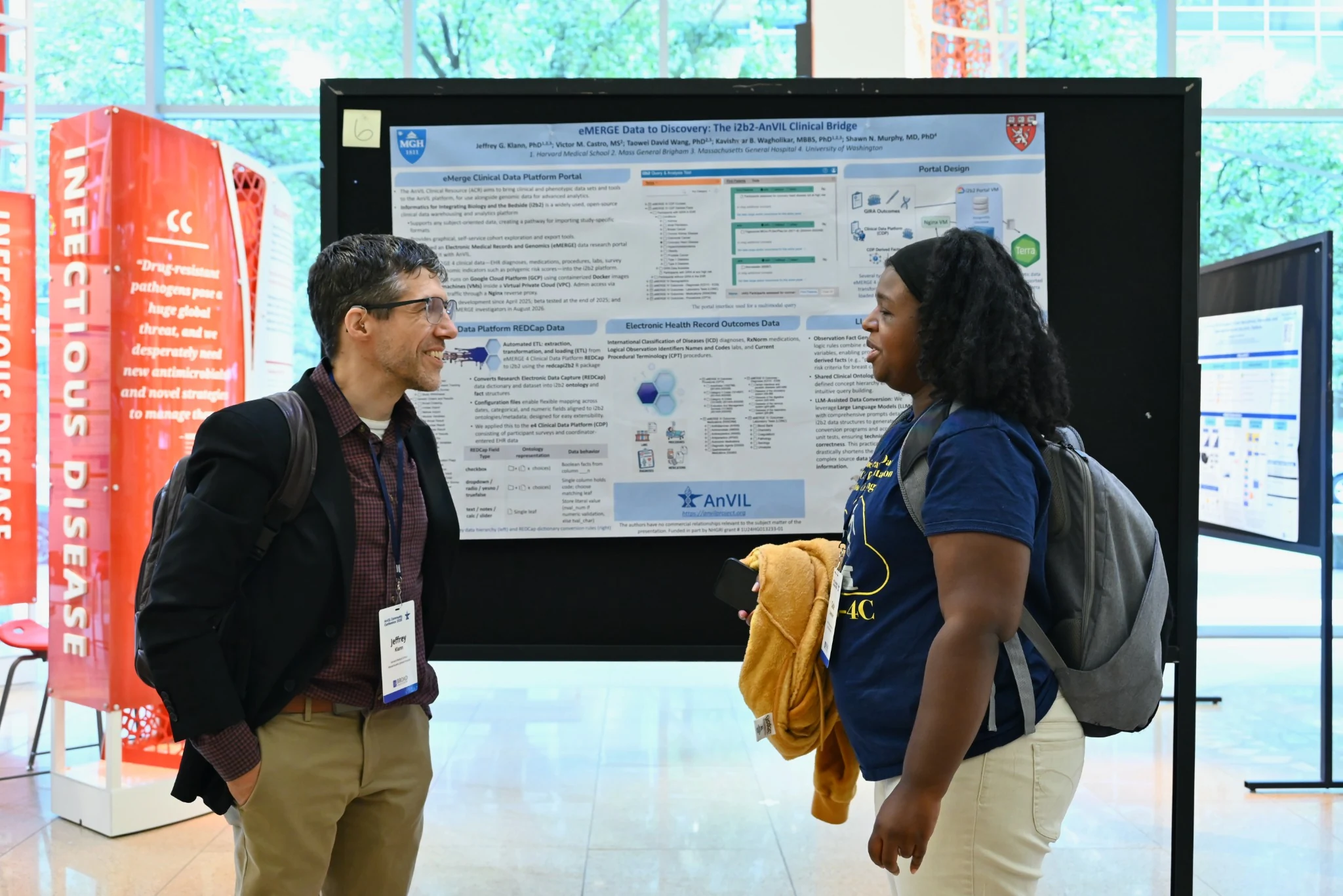
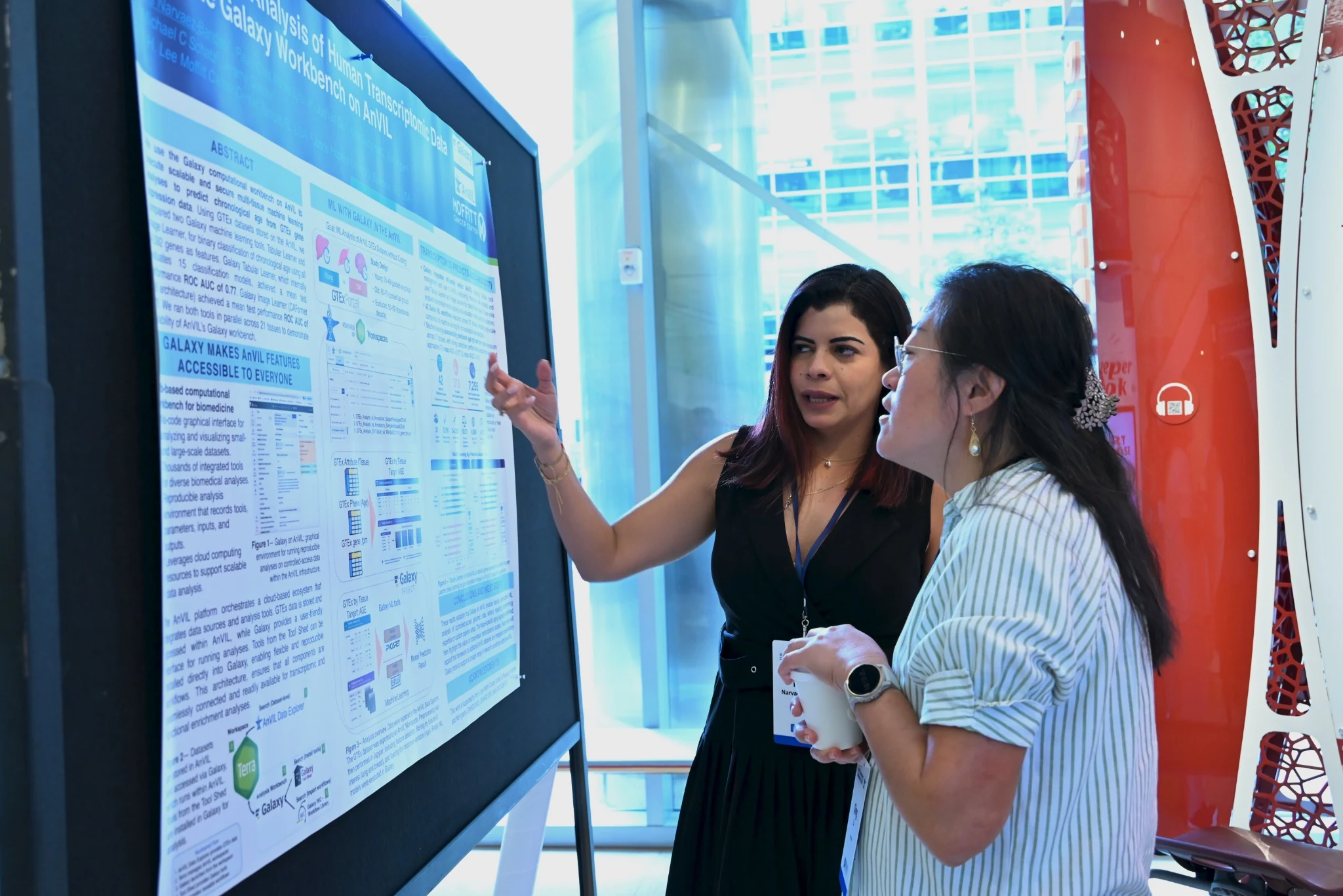
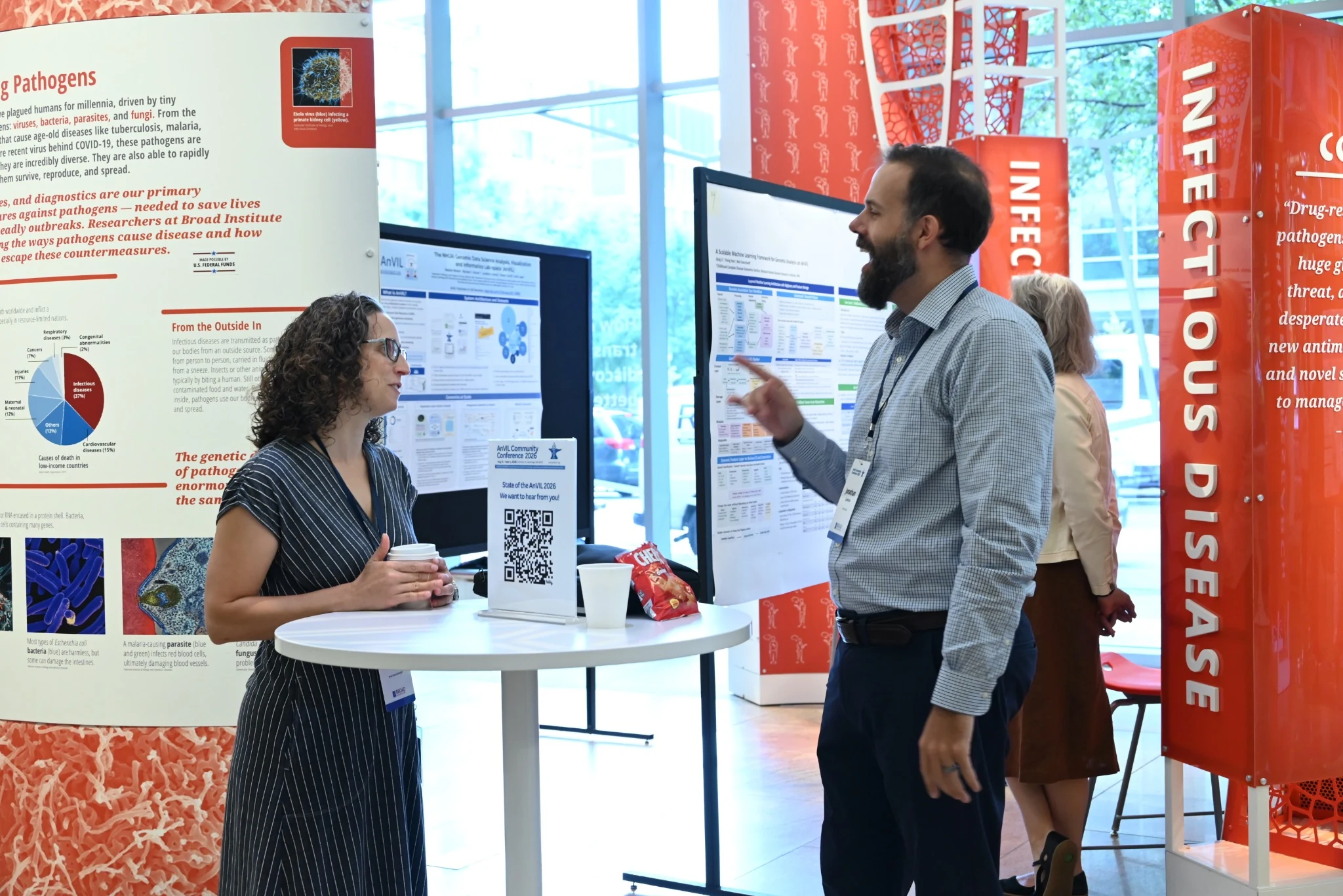
Poster presenters introduced their work through lightning talks before continuing conversations during the poster session. The format created opportunities for attendees to hear about a wide range of projects and then connect directly with presenters throughout the day.
Compute
The afternoon Compute session brought together invited, submitted, and technical talks focused on large-scale data resources, cloud-native machine learning, data submission, genotype imputation, agentic analysis, and connections between AnVIL and community software ecosystems.
ALS Compute: A Central Repository of Case/Control Whole-Genome Sequencing Data for ALS/FTD Gene Discovery
John Landers
Secure Cloud Native Machine Learning for Age Prediction with Galaxy on AnVIL
Isis Narvaez-Bandera
From Data Model to AnVIL Upload: Implementing GREGoR Data Submission in the ICTS Dashboard
Charles Hadley King
The AnVIL/All of Us Imputation Service
Chris Kachulis
Galaxy as a Reproducible Substrate for Agentic Analysis
Dannon Baker
Bioconductor and AnVIL: Fostering Symbiosis
Vincent Carey
Community and ELSI
The final talk session broadened the conversation from tools and compute to interoperability, education, governance, and equitable access. Talks explored how cloud infrastructure fits into a larger research ecosystem and how technical capabilities intersect with the people, policies, and institutions that shape genomic data use.
Watch the full ACC2026 Community, Education, Governance, and Access session:
Think Globally, Compute Locally
Angela Page
The Common Fund Data Ecosystem (CFDE) Incubator for Pan-NIH Resources: Enhancing Scientific Interoperability
Julie Jurgens
Principles, Structures and Implementation of Experiential Education in Computational Genomics
Scott Harrison
Adoption, Governance, and Democratizing Potential of Cloud Platforms
Sarah Nelson
Governance of Human Data Sharing for Research: Beyond Controlled Access
Pilar Ossorio
Closing Discussion and Ask Me Anything
The formal program concluded with an open discussion and Ask Me Anything session, giving attendees an opportunity to raise questions, revisit themes from across the meeting, and engage directly with members of the AnVIL community.
Networking and Community
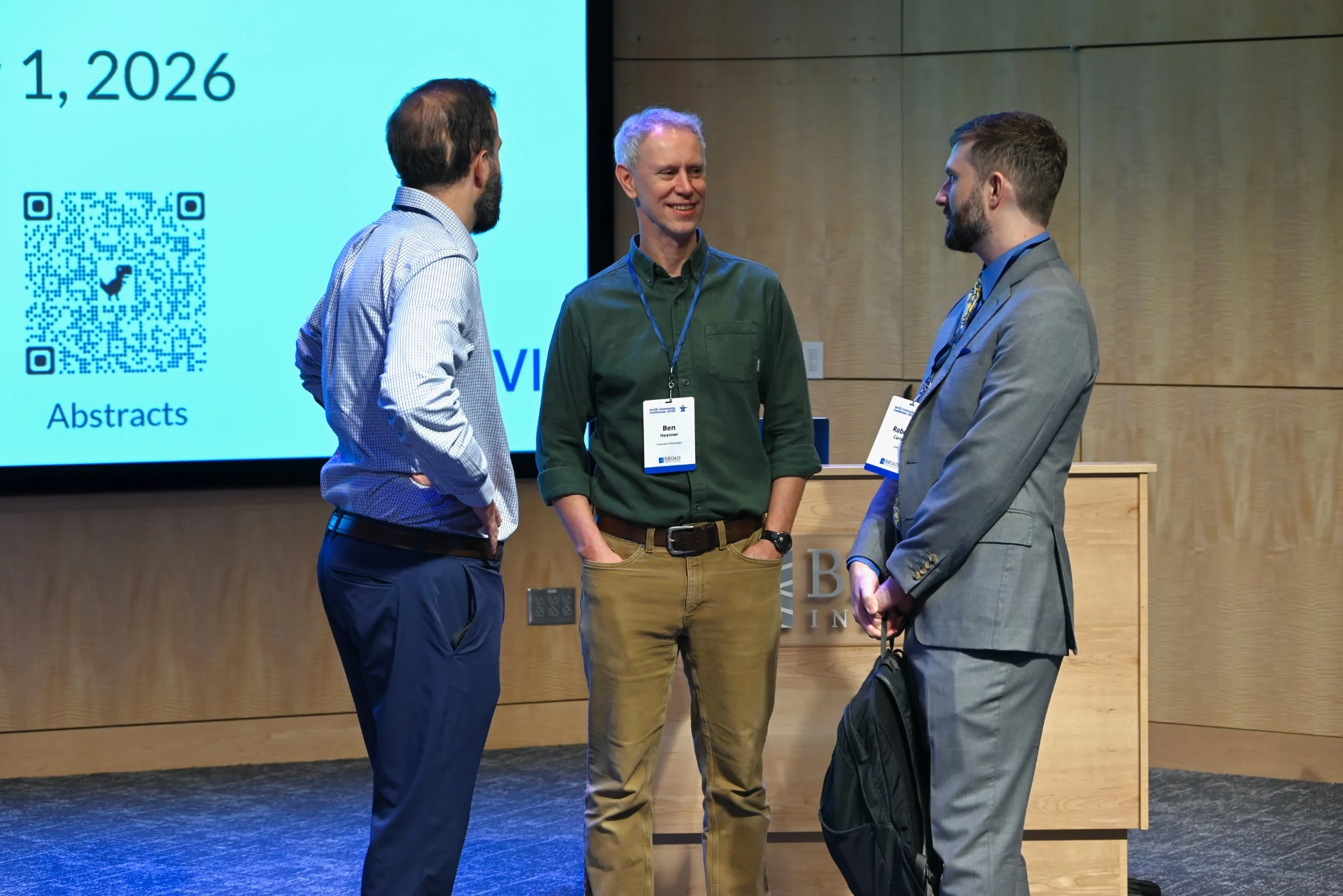
Beyond the formal program, ACC2026 created space for conversations across research groups, institutions, and areas of expertise. Breaks, lunch, poster discussions, and the evening networking reception gave attendees opportunities to continue conversations started during talks and workshops and to connect with others working across the AnVIL ecosystem.
Summary
ACC2026 brought the AnVIL community together to share research, demonstrate new tools and resources, and discuss where genomic data science in the cloud is headed next. Across workshops, keynotes, invited and submitted talks, posters, and community discussion, several themes appeared repeatedly: making data easier to find and use, improving interoperability across resources, reducing technical barriers to analysis, exploring responsible applications of AI, and continuing to build a community around shared genomic data and infrastructure.
The meeting also reinforced the importance of creating opportunities for users and developers to shape the platform together. Discussions throughout ACC2026 surfaced both practical challenges and ambitious ideas, from better metadata and easier cross-dataset analysis to AI-assisted workflows and community-wide scientific challenges.
Thank you to everyone who presented, facilitated workshops, shared a poster, participated in discussions, joined virtually, or helped make ACC2026 possible. Recordings from the conference are available in the ACC2026 YouTube playlist.